
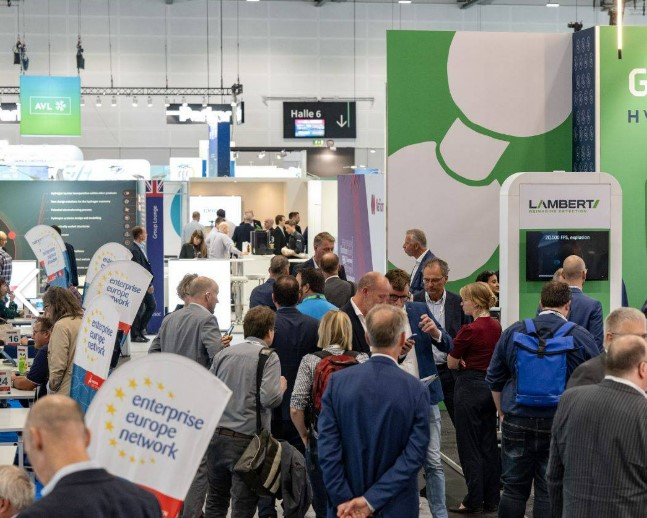
On November 13, 2026, the highly anticipated Horizons Hydrogène exhibition officially opened in Paris, France. As one of the most influential professional hydrogen exhibitions in Europe, this year's event brought together companies across the upstream and downstream segments of the global hydrogen value chain to showcase the latest hydrogen technologies, equipment, and solutions. On the exhibition floor, B2B matchmaking activities across the European hydrogen value chain continued to gain momentum, demonstrating the region's robust demand and immense potential in the clean energy transition.
Currently, the global energy landscape is undergoing a profound transformation. As a vital carrier of zero-carbon energy, hydrogen is assuming an increasingly prominent strategic position. In recent years, multiple European countries have introduced a comprehensive suite of policies to vigorously promote the scaled development of the hydrogen industry. From green hydrogen production and storage and transportation technologies to the construction of hydrogen refueling stations, and further to the widespread application of hydrogen fuel cells in the transportation and industrial sectors, Europe's hydrogen value chain is steadily maturing. Against this backdrop, the Horizons Hydrogène exhibition not only provides a platform for companies across all segments of the value chain to showcase their innovative achievements but also serves as a crucial bridge for transnational technological cooperation, trade, and investment.
Feedback from the exhibition floor indicates a highly vibrant B2B matchmaking atmosphere at this year's event. Numerous exhibitors and professional buyers engaged in in-depth negotiations on cutting-edge products such as core hydrogen components, water electrolysis equipment, high-pressure hydrogen storage tanks, and hydrogen-powered heavy-duty trucks. As Europe continues to advance its decarbonization targets, hydrogen application scenarios are expanding from the traditional chemical and refining sectors into diverse fields including heavy-duty transport, maritime, aviation, and distributed power generation. This trend has directly driven the urgent demand across the upstream and downstream value chain for efficient, low-cost hydrogen technologies.
In addition, the exhibition hosted multiple professional forums and technical seminars, where industry experts and corporate representatives engaged in in-depth discussions on pressing topics such as the economic viability of hydrogen infrastructure development, green hydrogen certification standards, and cross-border hydrogen trade barriers. Analysts point out that despite the broad prospects for Europe's hydrogen industry, it still faces challenges such as insufficient infrastructure investment and high green hydrogen costs. The successful convening of this exhibition has undoubtedly provided insights into addressing these industry pain points and created valuable opportunities for global hydrogen enterprises to enter the European market and deepen synergistic cooperation across the value chain. Looking ahead, with continuous technological iteration and sustained policy support, the European hydrogen market is poised for explosive growth, and the Horizons Hydrogène exhibition will continue to play its vital role as an industry bellwether.