
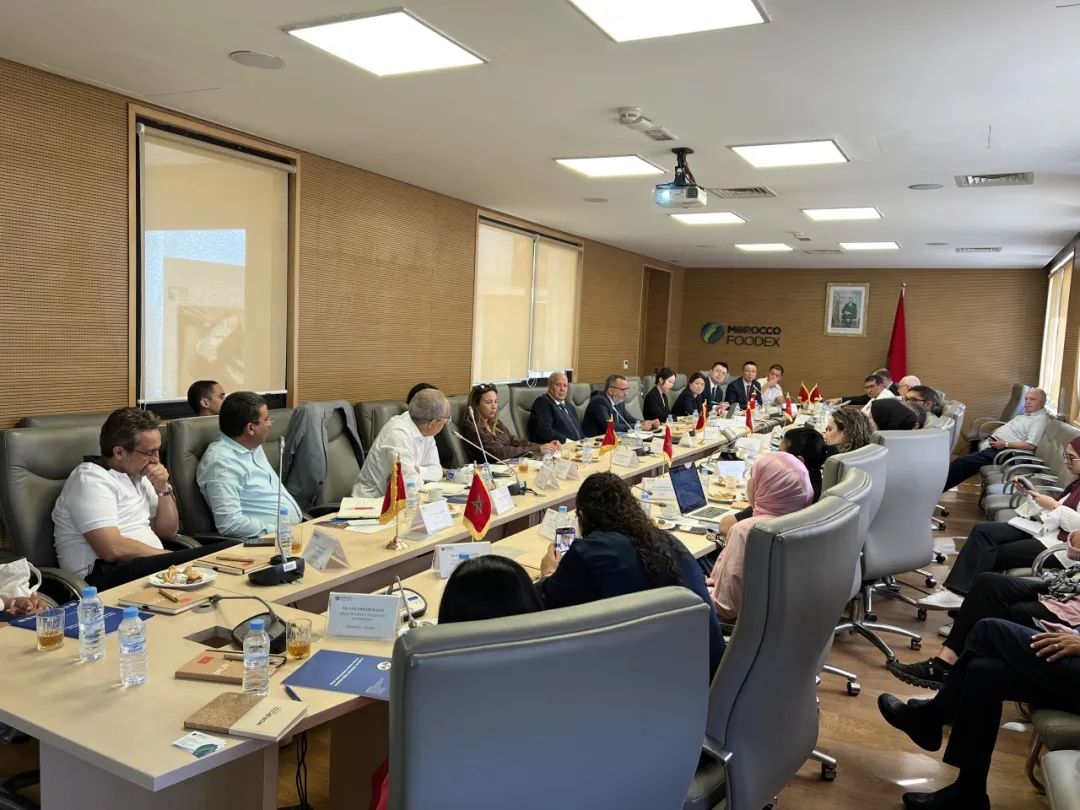
According to information released by MAPBUSINESS, Casablanca has marked a pivotal milestone in Sino-African economic and trade exchanges. From November 17 to 19, 2026, the 8th China-Morocco Trade Week (CTW Morocco) opened in the city. As a vital platform connecting the Asian, African, and European markets, this premier event not only continues its tradition of business matchmaking but also launches two specialized vertical exhibitions concurrently: the Africa Food Exhibition and the China-Morocco Smart Life Exhibition. The event has gathered over 200 exhibitors from 16 countries. Organizers expect to welcome 12,000 professional buyers on-site and schedule more than 340 targeted B2B matchmaking sessions.
In terms of exhibition layout and zoning, the organizers have closely aligned with the trajectory of global industrial upgrading, anchoring the showcase content deeply in three core sectors. The China-Morocco Trade Week is dedicated to integrating upstream and downstream procurement and supply chain networks, extending its reach into diverse sectors such as construction, energy, technology, and daily consumer goods. The parallel Smart Life Exhibition focuses on the intelligent evolution of residential and commercial spaces, showcasing cutting-edge technologies including security systems, automated lighting, next-generation home appliances, and smart home solutions. Meanwhile, the Africa Food Exhibition, targeting food manufacturers and the hospitality industry, highlights comprehensive solutions for the modern agri-food supply chain, featuring advanced industrial equipment such as energy-efficient kitchen systems, automated food processing lines, and smart refrigeration technologies.
Morocco's strategic location and value have been a focal point of discussion among attendees. David Wang, President of MIE Group, pointed out that leveraging its geographic and free trade advantages, Morocco has emerged as a hub connecting Europe, Africa, and the Middle East. He noted that the local expansion of hospitality infrastructure is significantly stimulating demand for packaging technologies and food supply chains, while the national renewable energy vision is also unlocking immense potential for the consumer electronics and energy storage industries. To this end, he advocated for multinational companies to demonstrate a long-term commitment in the local market and continuously deepen localized collaboration.
The vibrancy of this bilateral engagement was corroborated in official exchanges. Mehdi Laraki, Chairman of the Morocco-China Business Council under the General Confederation of Enterprises of Morocco (CGEM), revealed that Chinese interest in the Moroccan market is steadily rising, with the council routinely hosting one or two Chinese business delegations each week. He encouraged local businesses to seize this window of opportunity to introduce premium agricultural specialties such as argan oil and olive oil into the Chinese market. At the same time, he urged Moroccan industry players to deeply analyze China's technological breakthroughs in cutting-edge strategic fields such as healthcare, artificial intelligence, and new energy.
The deepening of economic and trade cooperation is underpinned by robust macroeconomic data. Zheng Wei, Counselor at the Chinese Embassy in Morocco, stated that driven by high-level exchanges, bilateral trade between China and Morocco surpassed the $10 billion mark for the first time in 2025, surging by 21.3%. By the end of 2025, China's stock of investment in Morocco had accumulated to $9.13 million. Synthesizing the signals from the exhibition and official data, Sino-African economic and trade ties are accelerating their evolution from the mere exchange of goods to deep integration across industrial chains. Morocco is shedding its label as a mere commodity transit hub. By leveraging its free trade agreement network, it is attracting Chinese capital and technology to take root in high-value-added sectors such as modern agri-food processing, smart hardware, and new energy. This synergistic evolution marks the comprehensive entry of Sino-African economic and trade cooperation into a new era of co-building supply chains and technological empowerment.