
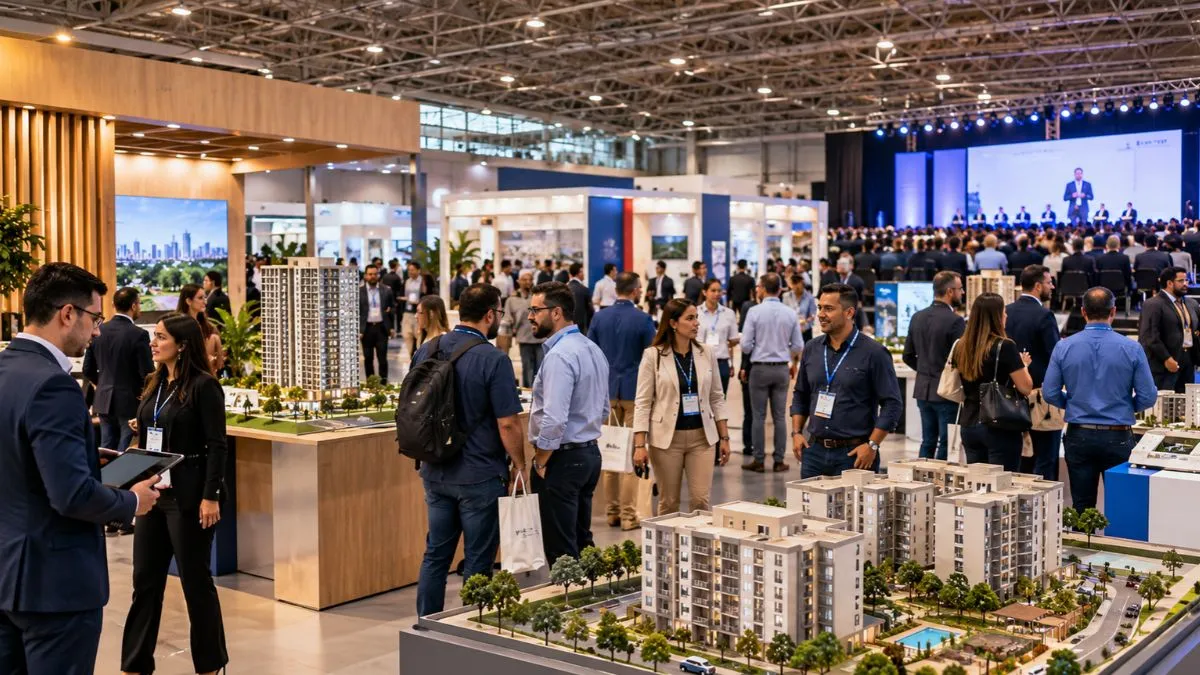
As soaring financing costs and a severe shortage of skilled tradespeople create a dual squeeze, where lies the breakthrough for Brazil's construction market? Despite a challenging macroeconomic environment, the Brazilian Chamber of the Construction Industry (CBIC) has projected a 1.2% GDP growth for 2026—a much-needed boost compared to last year's meager 0.5% increase. At this critical juncture, the inaugural Megaobra Construction Exhibition, designed to build industry consensus and explore breakthrough strategies, will kick off at the Expominas Exhibition Center in Belo Horizonte from November 24 to 26, 2026. This is far more than a mere industry gathering; it is a strategic nexus for Brazil's construction sector to rebuild its growth momentum against all odds.
What mission will the massive 16,500-square-meter exhibition space fulfill? Breaking away from the "showcase-only" effect of conventional trade shows, this year's Megaobra deconstructs the venue into three functional hubs. At the core of the product exhibition area is a concentrated showcase of cutting-edge technologies and innovative services. To ensure these technologies translate into tangible commercial value, highly efficient business matchmaking sessions are seamlessly integrated, creating a closed loop from exhibition to contract signing. Even more compelling is the strategic conference running throughout the event. Every day from 1:00 PM to 8:00 PM, the venue will transform into the industry's brain trust, bringing together policymakers, academic luminaries, and business leaders to dissect the pulse of the macroeconomy.
Who is driving this massive industry engine behind the scenes? Emir Cadar Filho, Vice Chairman of the Infrastructure Committee at the Federation of Industries of Minas Gerais (Fiemg), has taken on the role of initiator. On the execution front, Sinduscon-MG (the Construction Industry Union of Minas Gerais) and Cubo Eventos have built a solid foundation for implementation. On the stage of the strategic conference, intellectual sparks will fly as industry leaders such as André Campos from Emccamp, Evandro Negrão Filho from Sancruza and MyMall, Humberto Mattos from Somattos Engenharia, and Miguel Safar Filho from Concreto freely share the practical wisdom and forward-looking strategies they have forged in complex economic cycles.
Looking beyond the bustle of the exhibition floor, we must examine the deep-seated financial logic currently facing Brazil's construction industry. In a prolonged cycle of high interest rates, the cash flow of traditional construction enterprises is under unprecedented strain. The specially designed Business Matchmaking at Megaobra is far from a mere procedural innovation; it is a vital infusion for the industry's supply chain. By bridging the information gap and shortening communication channels between supply and demand, this high-density resource matching can effectively reduce enterprises' implicit transaction costs. In the current climate of tightening credit, countering macroeconomic uncertainty with confirmed orders and efficient capital turnover is precisely the core survival value that such specialized exhibitions offer to exhibitors.
On the other hand, the impressive data released by the Brazilian Institute of Geography and Statistics (IBGE)—showing 210,000 new jobs added in the quarter ending in September—cannot mask the structural concerns within the industry. The new jobs are largely concentrated in core infrastructure, while the scarcity of skilled tradespeople that truly constrains industrial upgrading remains severe. This also explains why the Products and Services Exhibition Area at this year's show places technological innovation in an unprecedentedly prominent position. As the demographic dividend gradually fades, introducing automated equipment, new building materials, and digital management tools to replace traditional labor has become the only viable path for Brazilian construction companies to overcome labor bottlenecks. The exhibition provides the perfect proving ground for these technological alternatives.
For professionals eager to seize the initiative in these transformations, how can they secure this ticket to the future? General admission is just 30 BRL (half-price), while delegates wishing to participate fully in the conference will need 75 BRL (half-price). All tickets must be secured through official digital channels. The daily opening hours from 1:00 PM to 8:00 PM will provide visitors with ample time for a deeply immersive experience. Here, every technological comparison and every in-depth conversation will be translated into tangible leverage for driving future corporate investment and business expansion.