
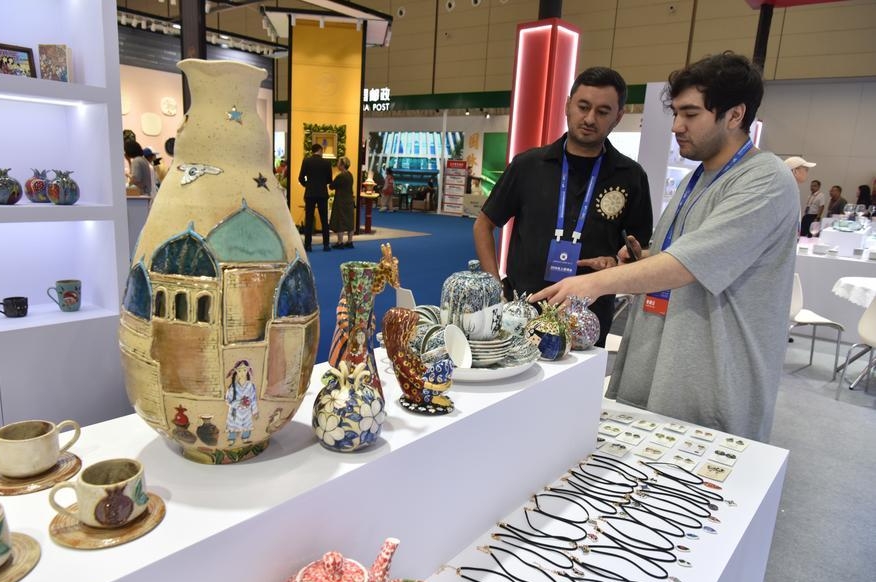
The global ceramics industry is rapidly transitioning toward a deep integration of new materials R&D and digital cultural innovation, with eco-friendly craftsmanship and 3D printing technologies now at the forefront of international procurement. Against this backdrop, the 2026 China Jingdezhen International Ceramics Expo officially opened on October 18 in Jingdezhen. Spanning 140,000 square meters, the five-day event has drawn over 1,000 professional buyers from 19 countries, including Germany, Japan, and Spain, to explore new frontiers in international trade.
Known as the Millennium Porcelain Capital, this city of 1.6 million permanent residents has demonstrated remarkable magnetism, attracting a net influx of 136,000 people over the past decade. It is now home to over 100,000 professionals across the entire ceramics industry chain, with more than half being "Jingpiao" makers—entrepreneurs and artisans who have relocated from other provinces or countries. Leveraging this robust talent pool, the Expo features meticulously curated core zones dedicated to smart ceramic manufacturing, creative design, international brand showcases, and exchanges among global ceramic hubs, with the scenario-based application of digital technologies serving as the central theme throughout the event.
At the opening ceremony, officials launched a brand-new digital cultural tourism platform designed to redefine how the industry engages with visitors, and officially unveiled the 2026 updated standards for the "Made in Jingdezhen" regional brand, a move aimed at further regulating the market and enhancing brand premium. Commenting on these initiatives, industry experts note that the fusion of its World Heritage status with a digital-first exhibition philosophy signals that the local ceramics sector is fully embarking on a high value-added, dual-track development path driven by cultural empowerment and technological innovation.
First held in 2004, the Expo has evolved over more than two decades, shedding its origins as a simple trade fair to emerge as a world-class comprehensive hub integrating capital, culture, and exhibition trade. This transformation is further bolstered by the inscription of the Jingdezhen Handmade Ceramic Industry Sites on the UNESCO World Heritage List on July 25 this year—China's 61st World Heritage site and the world's first porcelain-related heritage site. As a city that comprehensively chronicles the lineage of handmade porcelain production from the 10th to the 19th century, Jingdezhen is now leveraging this mature platform to present to the world its latest achievements in the high-quality development of China's ceramics industry.