
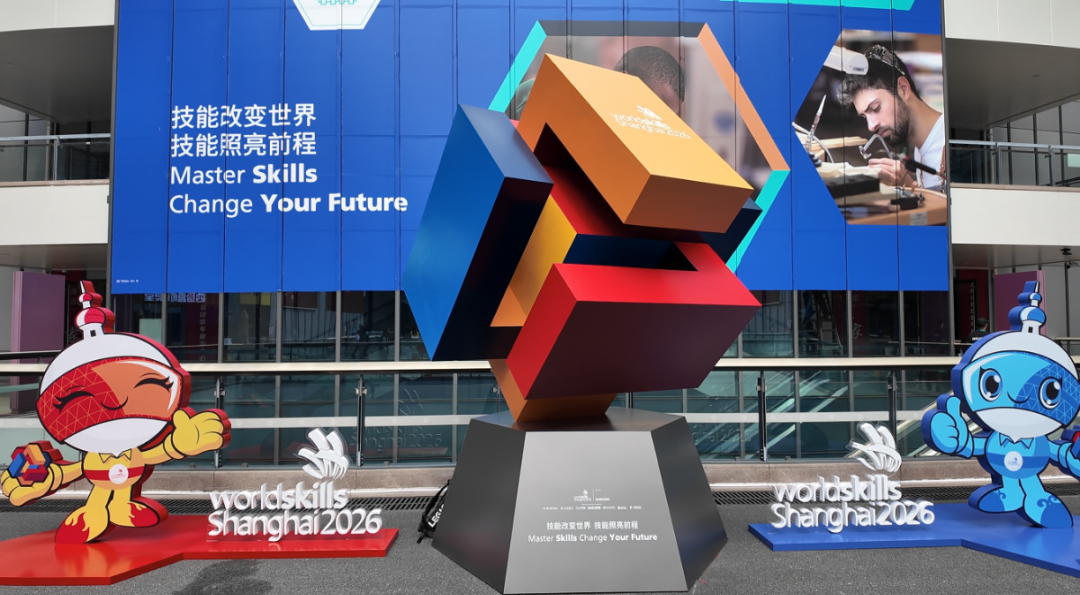
The 48th WorldSkills Competition opened on the evening of September 22 at the Shanghai World Expo Culture Center. Known as the "Skills Olympics," it is the world's highest-level, largest and most influential international vocational skills event, organized by WorldSkills every two years. Under the theme "Master Skills, Change Your Future," the competition runs from September 22 to 27, with the main competition venue at the National Exhibition and Convention Center (Shanghai).
Record scale is the defining feature of this edition. A total of 80 countries and regions registered, with 68 of them sending 1,385 competitors—both figures all-time highs. The event features 64 skill areas across six categories: manufacturing and engineering technology, information and communication technology, construction and building technology, transportation, creative arts and fashion, and social and personal services. The total number of skill areas is also a record.
The lineup reflects how industrial upgrading is reshaping demand for skilled talent. Seven events make their WorldSkills debut—drone systems, smart security technology, software testing, digital interactive media design, rail vehicle technology, dental technology, and retail—the largest number of new entries ever, with advanced-manufacturing-related events accounting for about one-third of the program. All 64 events run simultaneously from September 23 to 26, with each involving roughly 15 to 22 hours of competition; results are announced at the closing ceremony on the evening of September 27. Some events include a "mystery module" unveiled only on competition day to test composure and fundamentals.
China's delegation comprises 220 members, including 71 competitors from 21 provinces with an average age of 21, taking part in all 64 events; over 60 percent are teachers and students from technical colleges. China has topped both the gold medal table and overall team standings for four consecutive editions since 2017.
From an event-delivery perspective, this edition for the first time adopts a "one competition, two conferences" model, staging the competition, the WorldSkills Conference and the WorldSkills Expo together in a hybrid "sport + conference + exhibition" format. The competition uses eight halls of the NECC (Shanghai), with a core competition area of about 70,000 square meters plus a 26,500-square-meter logistics and storage hall, supported by 110 technical service providers, more than 1,400 technical staff and 3,881 volunteers. The Expo spans nearly 50,000 square meters, with 31 provinces and the Xinjiang Production and Construction Corps presenting "one skill per province," while the Conference gathers about 4,000 delegates as the highest-level policy dialogue platform in the global skills community.
Embracing a "watch, play and experience" approach, all 64 events across eight halls are open to the public free of charge by registration, with hands-on stations where visitors can operate robots, try 3D printing and flower arranging. Malaysian Prime Minister Anwar Ibrahim attended the opening ceremony. Through this single event, Shanghai is presenting to the world its exhibition capacity, vocational education achievements and industrial upgrading—all at once.