
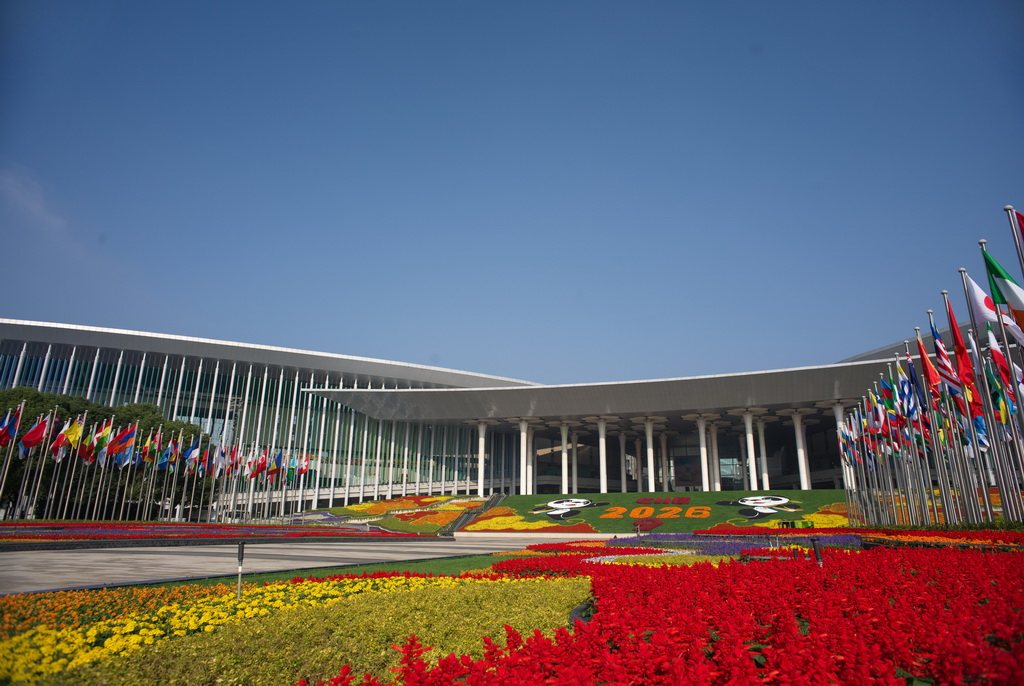
The 9th China International Import Expo closed in Shanghai on November 10. Six days, 440,000 square metres, 4,142 exhibitors and $85.45 billion in one-year intent deals — that is the ninth report card the CIIE has delivered.
For the exhibition industry, the significance of these figures goes beyond scale. They mark how a trade show grows from a marketplace into industrial infrastructure.
Five core metrics set records at the same time
Five core indicators broke records this year: 4,142 exhibitors; total exhibition space exceeding 440,000 square metres for the first time; more than 300 Fortune Global 500 companies and industry leaders; 485 representative products making a global debut, an Asian premiere or a China debut; and $85.45 billion in one-year intent deals, up 2.3 per cent from the previous edition.
It is the first time in the CIIE's nine-year history that all five indicators have reached record highs simultaneously.
One clarification matters: the $85.45 billion is measured as "one-year intent deals", not signed contracts on the floor. The CIIE has used this benchmark since its first edition to gauge the scale of purchasing intentions reached during the show. Only with that in mind can the figure be read accurately.
The exhibitor mix is shifting: 2,000 newcomers and nearly 200 nine-time veterans
Structure is more telling than volume.
The number of overseas exhibitors reached a record high, with more than 2,000 first-time participants, most of them small and medium-sized overseas firms and regional specialty brands. For these companies, the CIIE lowers the barrier to the Chinese market — one exhibition puts their products directly in front of Chinese buyers.
At the other end sit the veterans. Nearly 200 companies and overseas organisations have exhibited at all nine editions, including 169 companies and 30 overseas exhibition organisers. Over nine years, many of them have moved from exhibitor to investor.
Newcomers and veterans expanding at the same time shows the CIIE is doing two jobs at once: giving new entrants a low-cost position to test the water, and giving long-term participants a promise they can keep cashing in.
51 trading delegations and 470,000 registered visitors: a denser trading network
This edition assembled 51 trading delegations and more than 700 sub-delegations, with over 470,000 registered visitors, exceeding last year.
Eighty side events were held during the show, including 62 concentrated signing ceremonies that produced more than 400 cooperation intentions.
One change worth noting: the CIIE is no longer only a one-way platform matching foreign suppliers with Chinese buyers. Exhibitors are also seeking partners among themselves. The trading network has moved from one-to-many to many-to-many — a marker of a maturing exhibition.
From six days to 365: the time dimension of a trade show is stretching
As the six-day programme ended, the "365-day online CIIE" was launched.
The direction is clear: extend six days of concentrated trading into year-round matchmaking. For the exhibition industry, this is a live experiment in the life cycle of a trade show — a show's value should not end the day the booths come down.
The 10th edition is already open: 143 companies signed, over 100,000 square metres
On closing day, preparations for the 10th CIIE were already under way. So far 143 companies and organisations have signed up, covering more than 100,000 square metres.
Starting the next edition's recruitment as the current one closes is a rhythm the CIIE has settled into over nine years. For organisers, it means the sales cycle and the show cycle run in parallel, not in sequence.
The CIIE method
In nine years, the CIIE has grown from a newcomer into the world's largest import-themed exhibition. What it has validated is a method:
Use national-level purchasing organisation to compress supply scattered across the globe and demand from the Chinese market into six days and 440,000 square metres for concentrated matching; then use an online platform to extend that matching across the year.
Scale is the result, not the cause. What actually holds up the $85.45 billion is the network formed by 51 trading delegations, more than 700 sub-delegations and 470,000 registered visitors.
For anyone running a trade show, or preparing to launch one, that is worth remembering more than the numbers.