
Bilateral trade between Vietnam and Cambodia surged to USD 11.33 billion in 2025, a remarkable milestone representing more than a threefold increase over the past decade and underscoring the deep economic integration between the two nations. As Cambodia's largest trading partner within ASEAN and its third-largest globally, Vietnam is continuously deepening this complementary economic relationship through multifaceted institutional platforms.
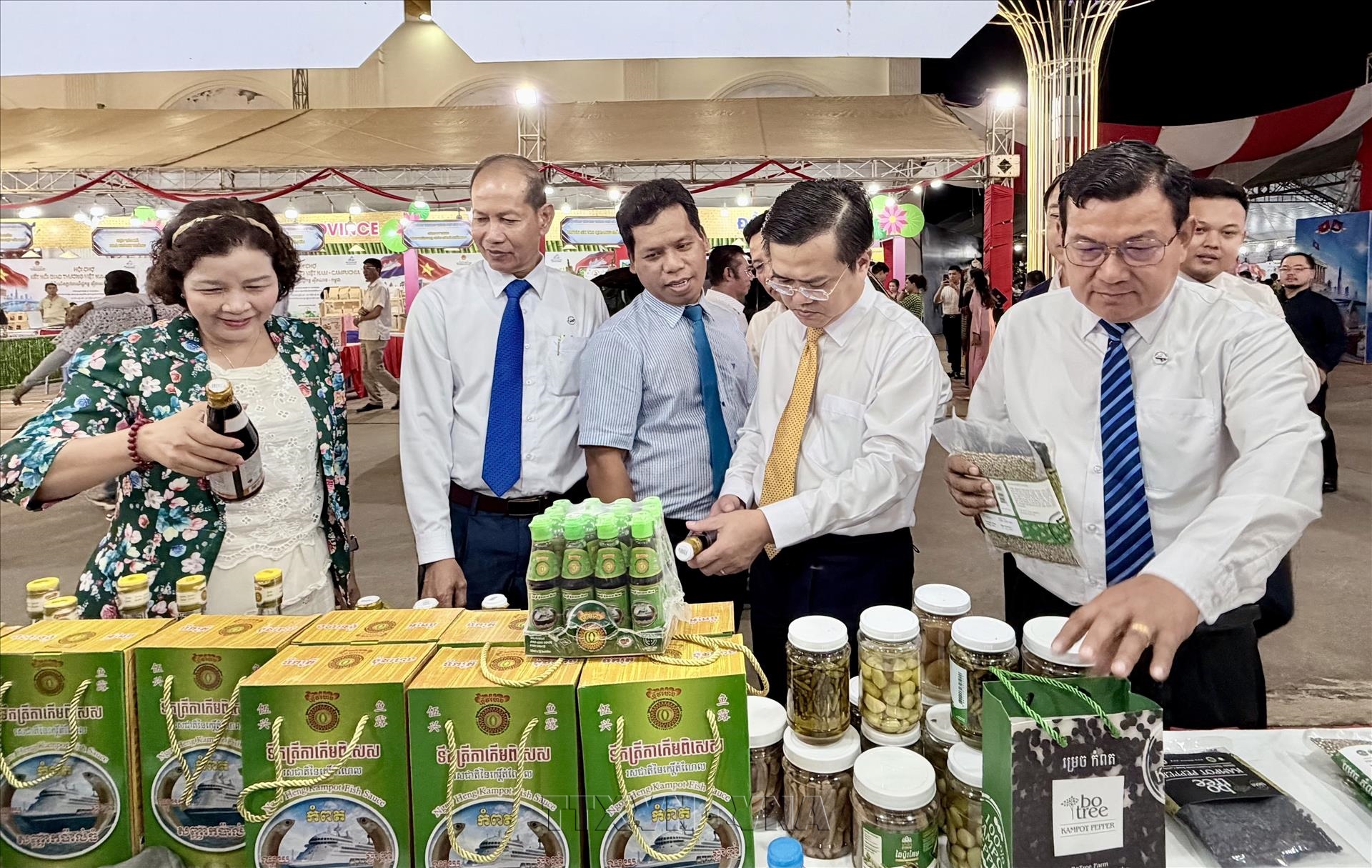
Against this backdrop, the three-day Vietnam-Cambodia Trade Promotion Forum kicked off on November 12 in An Giang Province, centered around the concurrent bilateral trade expo. Co-organized by the Market Surveillance and Development Department under Vietnam's Ministry of Industry and Trade and the An Giang Provincial Department of Industry and Trade, the major event features 13 functional zones. Ten of these zones are dedicated to showcasing Vietnam's local specialties, while the remaining three are allocated exclusively for Cambodian exhibitors. A total of 200 exhibitors, ranging from cooperatives and family workshops to various production and trading entities, are utilizing 150 standard booths to present an extensive array of products. These offerings span OCOP-certified agricultural goods, premium rural industrial products, and processed foods and daily consumer items with strong export potential to Cambodia.
In his opening address, Bui Nguyen Anh Tuan, Deputy Director of the Market Surveillance and Development Department under the Ministry of Industry and Trade, analyzed the fundamental dynamics of the bilateral economic and trade relationship. He looked beyond the expo's traditional role in trade promotion, positioning it instead as a "strategic hub for forging long-term business partnerships." He revealed that such high-level matchmaking initiatives aim to establish sustainable distribution networks, thereby injecting enduring momentum into the real economies of both countries.
In terms of the exhibition lineup, Vietnam's focus on promoting OCOP program products and agro-aquatic goods precisely aligns with Cambodia's upgrading demand for high-quality everyday consumer products. This product mix, centered on "local specialties and export-potential goods," reflects the evolution of Vietnam-Cambodia border trade beyond its early stages of primitive barter among border residents. Leveraging the geopolitical advantages of border hubs like An Giang Province, the two countries are utilizing officially led trade promotion forums to integrate fragmented cross-border logistics into branded, standardized modern supply chains. This not only facilitates the deep penetration of Vietnam's competitive production capacity into the Cambodian market but also introduces higher value-added consumer choices to Cambodia, marking a substantive leap from a "corridor economy" to an "industrial economy."