
There is a question facing everyone who runs an exhibition: when a name has been in use for more than a decade and the industry's hot topics have turned over several times, should the name of the event still be changed?
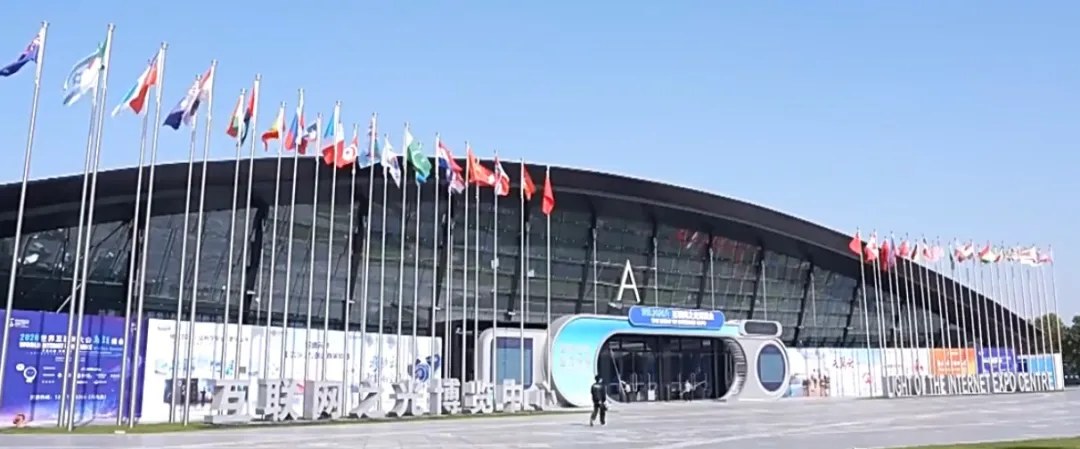
On 3 November, the 2026 World Internet Conference Wuzhen Summit opened in Wuzhen, Zhejiang Province.
When the first World Internet Conference was held in Wuzhen in 2014, the hottest topic in the industry was the mobile internet, specifically mobile payments and online-to-offline services. This year, the hottest topics are large models and embodied intelligence.
Same venue, same nameplate, and the content has already been replaced.
Another event faces a similar problem.
The 25th China Internet Conference, held in Beijing in July, carried the theme of a new journey driven by intelligence and integration, written into the wider framing of the 15th Five-Year Plan. The sub-forum held in Nanjing in October was formally titled the 2026 China Internet Conference Nanjing Session and Conference on AI-Empowered Integration of the Digital and Real Economies.
Apart from the name of the event, almost everything inside has changed.
Meanwhile, several newer names are growing. New is relative; they are not actually new, they have simply reached the breakout phase of their industry.
The 9th World Artificial Intelligence Conference, held in Shanghai in July, pushed exhibition space above 100,000 square metres for the first time, with more than 1,100 companies, over 3,000 exhibits and more than 140 forums. Tickets were reportedly impossible to get.
The 11th World Robot Conference, held in Beijing in August, gathered more than 300 companies across 50,000 square metres of exhibition space. On-site attendance reached 557,000 visits.
At the Light of the Internet Expo held alongside the Wuzhen Summit, the organisers presented what they call the intelligent internet in full, with satellite internet, quantum communication, 6G and ultra-wideband all listed as showcase priorities.
In 2022, the World Internet Conference was formally established as an international organisation headquartered in Beijing. That turned the name from the title of a meeting into the name of a standing international body. With the change in institutional identity came a clear structure: the organisation carries the name World Internet Conference, while the event is called the Wuzhen Summit.
The real question was never the name
In the exhibition industry, there is in fact a standard answer. It is this: what problem does this event solve for the industry?
In the eyes of exhibition professionals, the phrase old bottle, new wine is not an embarrassment. It is the normal state of affairs.
How many editions an exhibition can run depends not simply on whether its name is current, but on whether it offers a reason you cannot afford to skip.
That reason can be orders. It can be standards. It can be policy. It can be people.
Look at this year's events side by side and the answers differ.
The Wuzhen Summit put open source into its theme for the first time. It is a smart choice, because open source is the most fundamentalist part of the internet spirit: open, shared, decentralised. Using it to connect to artificial intelligence works smoothly, and it occupies ground that others cannot easily take.
The World Artificial Intelligence Conference has claimed seeing the latest. With 100,000 square metres, 1,100 companies and 3,000 exhibits, it pushes firsts and comprehensiveness to the limit.
The World Robot Conference has claimed delivery. This year it introduced a procurement day for the first time, brought central state-owned enterprises' application scenarios directly onto the show floor, and grew exhibitors from 169 two years ago to more than 300, with exhibits rising from just over 600 to more than 3,000. It swapped looking at prototypes for signing contracts.
The China Internet Conference has claimed integration of the digital and real economies, and the coordination of computing and power. Neither phrase is catchy, but both are substantive and describe things genuinely happening in industry.
Four answers, four positions. None has replaced another. The division of labour has simply become finer.
The shelf life of a name
Back to the original question.
How long does an exhibition name last?
For as long as it can still accurately describe what problem this event solves and for whom, it has not expired.
Once that description needs a subtitle, a qualifier or a conjunction to hold together, it has started to expire.
By that standard, the title 2026 China Internet Conference Nanjing Session and Conference on AI-Empowered Integration of the Digital and Real Economies is itself a reminder: the name of the main conference can no longer contain what the session wants to do.
That is not a bad thing. This year the Internet Society of China also launched an AI Plus industrial ecosystem conference and an AI Plus conference alongside the China Internet Conference. The old brand holds the credibility, the new brands carry the new business, and the two legs walk together. Many industry associations use this approach, and it is safer than forcing a rename.
As for Wuzhen, its choice this year is to make open source real. If it succeeds, the event gains a new reason to be indispensable. If it does not, the word internet will look more and more like a prefix in need of explanation, year after year.
Everyone in this industry knows it.